
Unlocking the Full Value of Podcasting
Podcasting is often treated as a single format: sit down, record a conversation, publish the episode, then cut a few clips for social afterwards.
But when planned properly, a podcast recording can become much more than that. It can be the foundation for a wider content campaign, giving organisations long-form episodes, short-form social clips, behind-the-scenes material, promotional assets and a more relaxed way to communicate ideas, personality and expertise.
For a project with Hat Trick Productions, we filmed a nine-episode comedy podcast series with two comedians over three days. The setup was designed not only to capture the full conversations, but to create a production workflow that made the content faster, more efficient and more engaging across platforms.
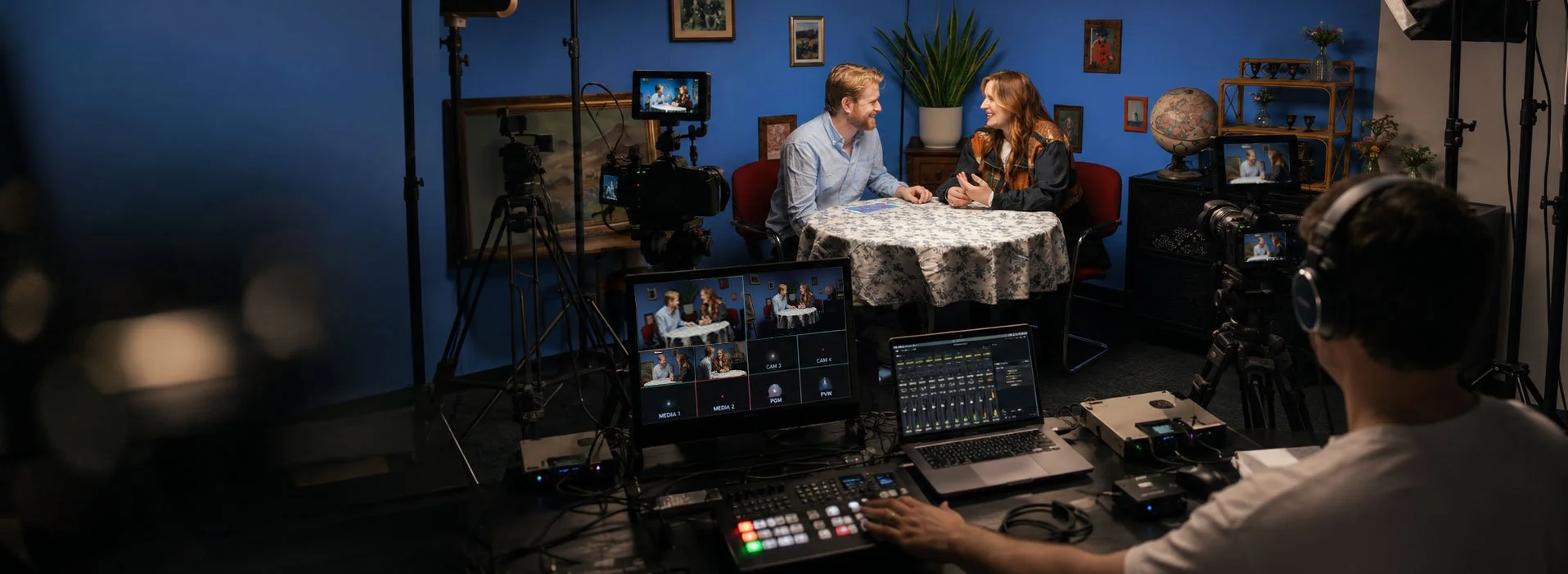
A key part of that approach was live vision mixing. Rather than relying entirely on post-production to cut between cameras after the shoot, we mixed the conversations live as they happened. This meant that the rhythm of the edit became part of the recording itself.
The result was a podcast series with a more immediate, instinctive feel, while also helping to keep post-production costs down and allowing content to be released quickly.
Thinking Beyond the Podcast Episode
The value of a podcast does not stop at the full-length episode.
A long-form conversation gives you access to natural interaction, personality, humour, insight and spontaneity. Within that, there are usually multiple moments that can work across different platforms. But those moments are strongest when they are considered before the shoot, not only discovered afterwards.
It is common to film a podcast and then pull clips from the finished episode for social media. That can work, but it often means the social content becomes an afterthought. The clips may be funny or interesting, but they are still shaped by the structure of the longer conversation.
A stronger approach is to think about the podcast and the social clips as connected but distinct outputs.
That means building social moments into the filming schedule. It means thinking about which questions, prompts or games might work as standalone clips. It means giving the contributors space to create moments that feel natural within the conversation, but also have enough clarity and energy to work for someone encountering them on Instagram, TikTok or YouTube Shorts.
The aim is not to interrupt the podcast format. It is to plan the recording in a way that makes the most of the time, talent and setup already in place.
Why Live Editing Works
Live editing, or vision mixing, changes the feel of a filmed podcast.
In a traditional multi-camera podcast setup, the cameras are recorded separately and the edit is built afterwards. This gives flexibility, but it also means every episode needs to be shaped in post-production. For a multi-episode series, that can become time-consuming and expensive.
By vision mixing live, the production team makes those editorial decisions in the moment. The cut follows the natural rhythm of the conversation: a reaction, a glance, a laugh, a pause, an interruption.
For comedy, this is especially valuable. Timing matters. The edit needs to respond to the energy in the room. A live mix can capture that instinctively, giving the finished programme a more immediate and responsive feel.
It also creates efficiency. With the main edit already built during the recording, the post-production process can focus on refinement rather than starting from scratch. This helps reduce costs, speed up delivery and make it possible to release content quickly.
For organisations producing a high volume of content, that workflow can make a significant difference.
Creating a More Relaxed Way to Communicate
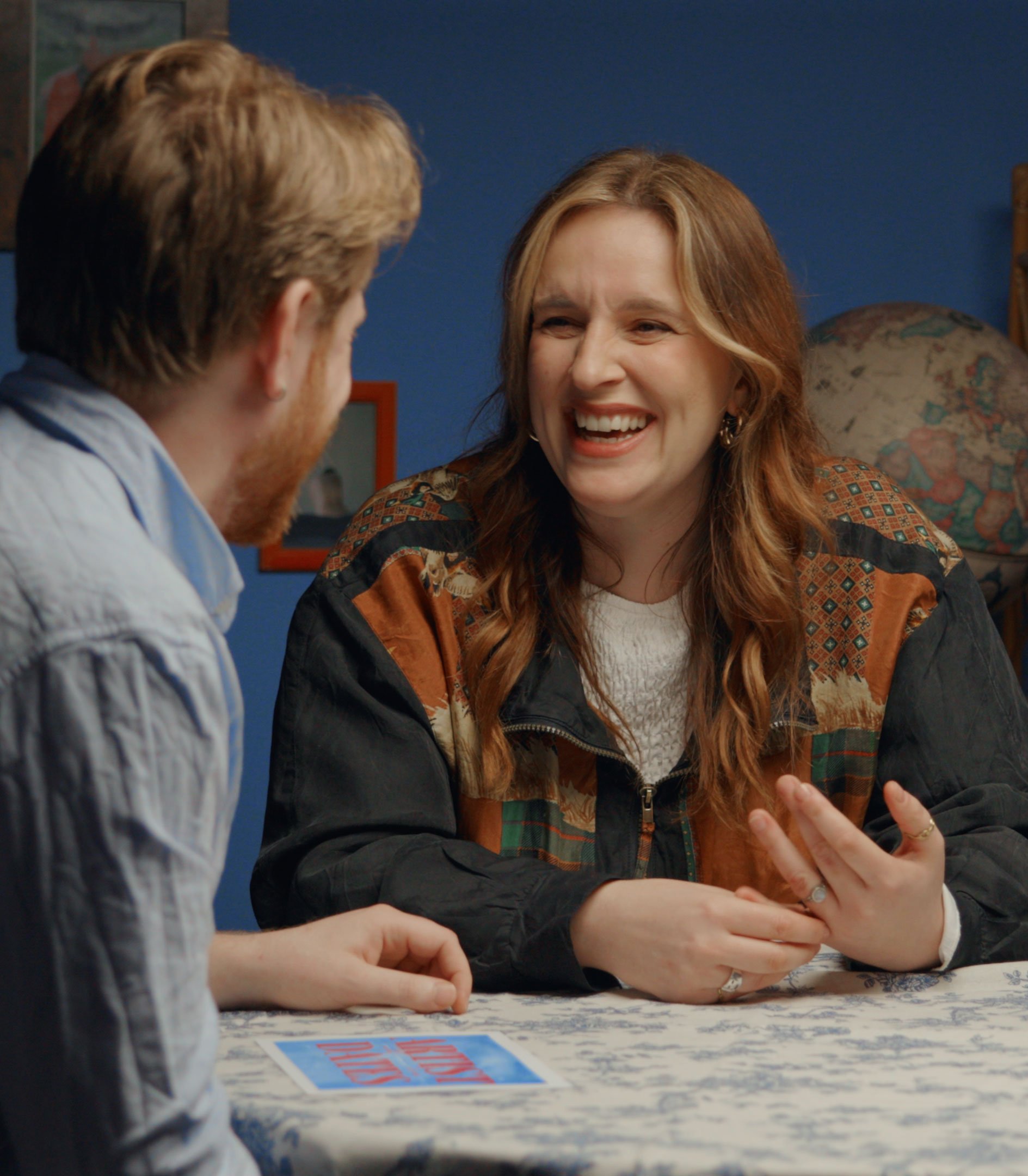
The podcast format offers something a traditional talking-head video often cannot: a sense of ease.
A talking-head film can work well when a message needs to be direct and concise, but it can also feel formal. A podcast allows ideas to unfold more naturally. People can respond, disagree, laugh, tell stories and build rapport.
For brands, cultural organisations and institutions, this creates a more human connection with the audience. Contributors sound more like themselves, and the viewer or listener feels invited into a conversation rather than presented to.
The best podcast productions are still carefully structured. The difference is that the planning supports a relaxed tone rather than making the content feel overly controlled.
Planning for Every Platform
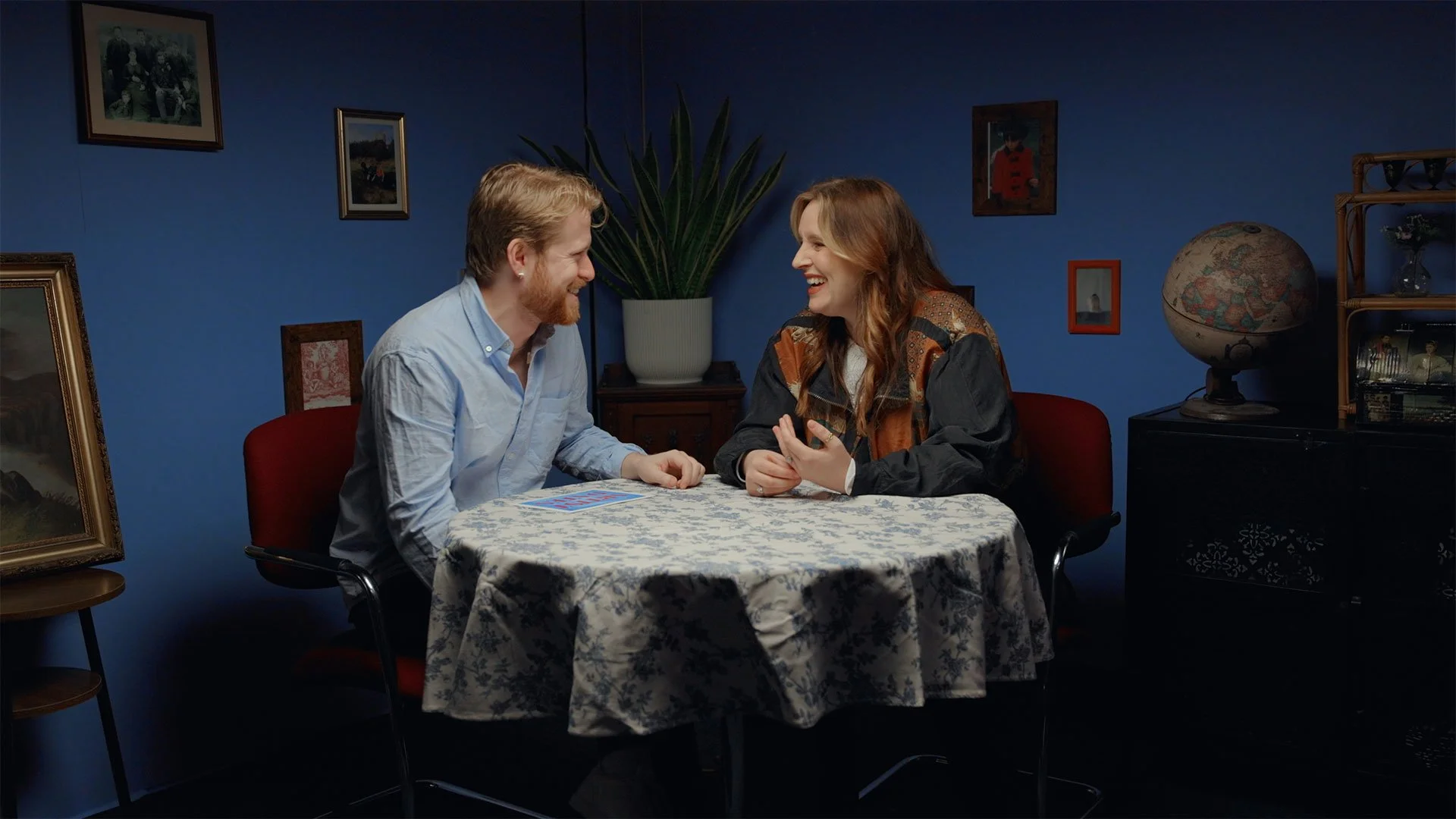
A podcast recording can produce content for several platforms, but each platform needs to be considered properly.
The full episode may be designed for YouTube or podcast platforms, where the audience is willing to spend more time with the conversation. The edit can breathe. The pacing can be slower. The viewer can settle into the relationship between the contributors.
Social clips need a different treatment. They need to land quickly, establish context and give the audience a reason to keep watching. The strongest clips often have a clear setup, a punchline, a surprising opinion or a moment of chemistry between the contributors.
Promotional edits need another approach again. They may need to communicate the premise of the series, establish the tone and introduce the talent in a short space of time.
This is why a podcast should not simply be treated as one long video that gets chopped into smaller pieces. Each output has a different job to do.
By planning those outputs before filming, the production becomes more efficient and more strategic. The shoot is not just capturing episodes. It is creating a bank of content designed to work across a wider campaign.
A Smarter Way to Produce More Content
The real value of podcasting is not just that it gives you a podcast.
It gives you time with contributors. It gives you conversation. It gives you personality, reactions, stories and moments that can be shaped for different audiences and platforms.
For Hat Trick Productions, filming a nine-episode series over three days, supported by live vision mixing, created a workflow that was fast, efficient and creatively responsive. It helped keep post-production manageable, allowed the content to be released quickly and gave the series a live, instinctive energy.
For any organisation considering the podcast format, the opportunity is to think beyond the episode. Ask what else the recording can create. Ask how the format can support social, YouTube, promotional content and audience engagement. Ask whether a conversation could communicate your message more naturally than a traditional talking-head film.